


Recognition points that turn into rewards people actually want
Karma connects peer recognition to real employee perks — automated gift cards, custom rewards, and group celebrations. Part of every employee incentive program that actually changes behaviour.
Automated gift cards
Custom company rewards
Group team celebrations
Recognition works without rewards. It works even better with the right ones.
Karma's rewards tab is completely optional — many teams use Karma purely for recognition. For those who want rewards, points earned through peer recognition can be redeemed for gift cards, custom perks, or group rewards. The result is an employee incentive program that feels personal, while keeping recognition at the center.
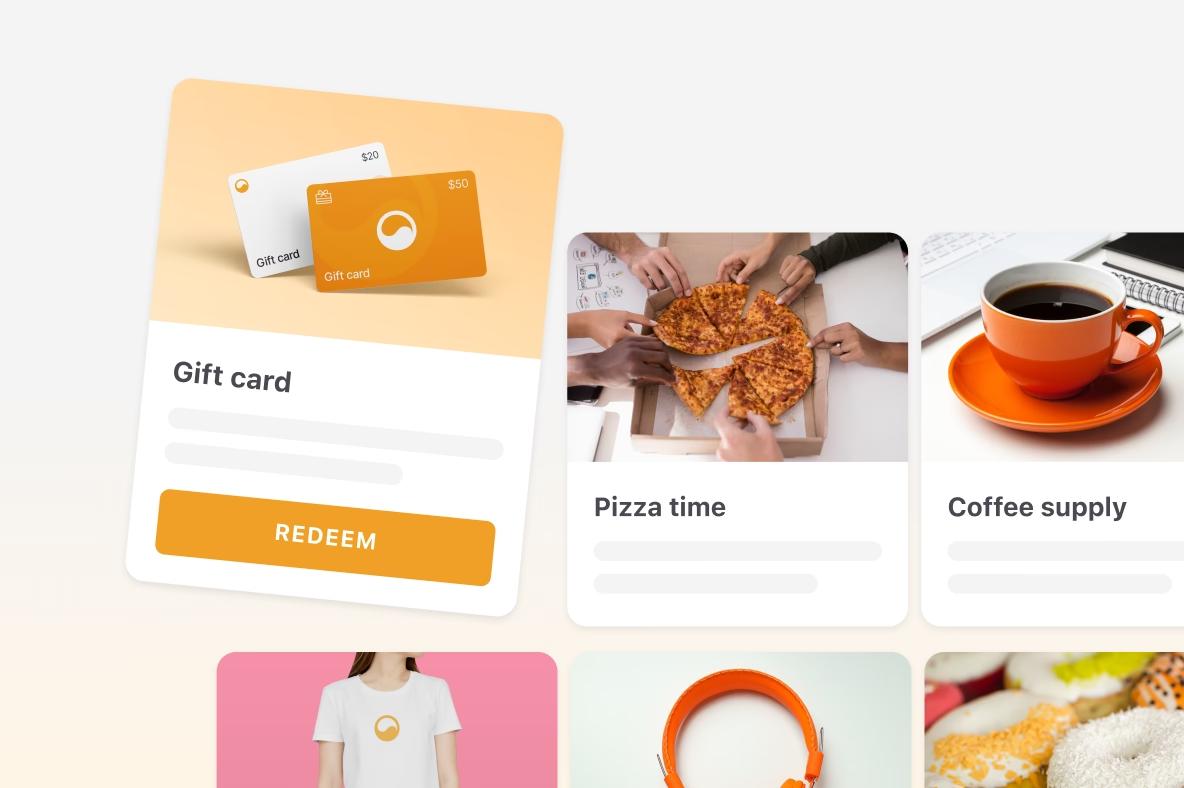
Gift cards for employees — popular brands, charity donations, real choice, zero admin
Gift cards for employees are one of the highest-rated rewards in every incentive program survey — because choice beats guesswork every time. Karma connects recognition directly to a catalog of popular brand gift cards and charity donations. Employees accumulate karma points through peer kudos and spend them on the brands that matter to them — or donate to a cause they care about. No manual processing, no vouchers expiring in a drawer, no friction between a great piece of work and a real reward.
- Popular brand gift cards — employees choose from the catalog and spend their points on what they actually want
- Charity donations — employees can direct their karma points to a cause they care about instead of a personal reward
- Company-configured catalog — pick the brands, causes, and non-monetary perks that fit your culture and rewards program
- Available across Slack, MS Teams, Telegram, and Web — same reward experience no matter where your team works
Build a reward catalog that reflects your culture — not a generic vendor list
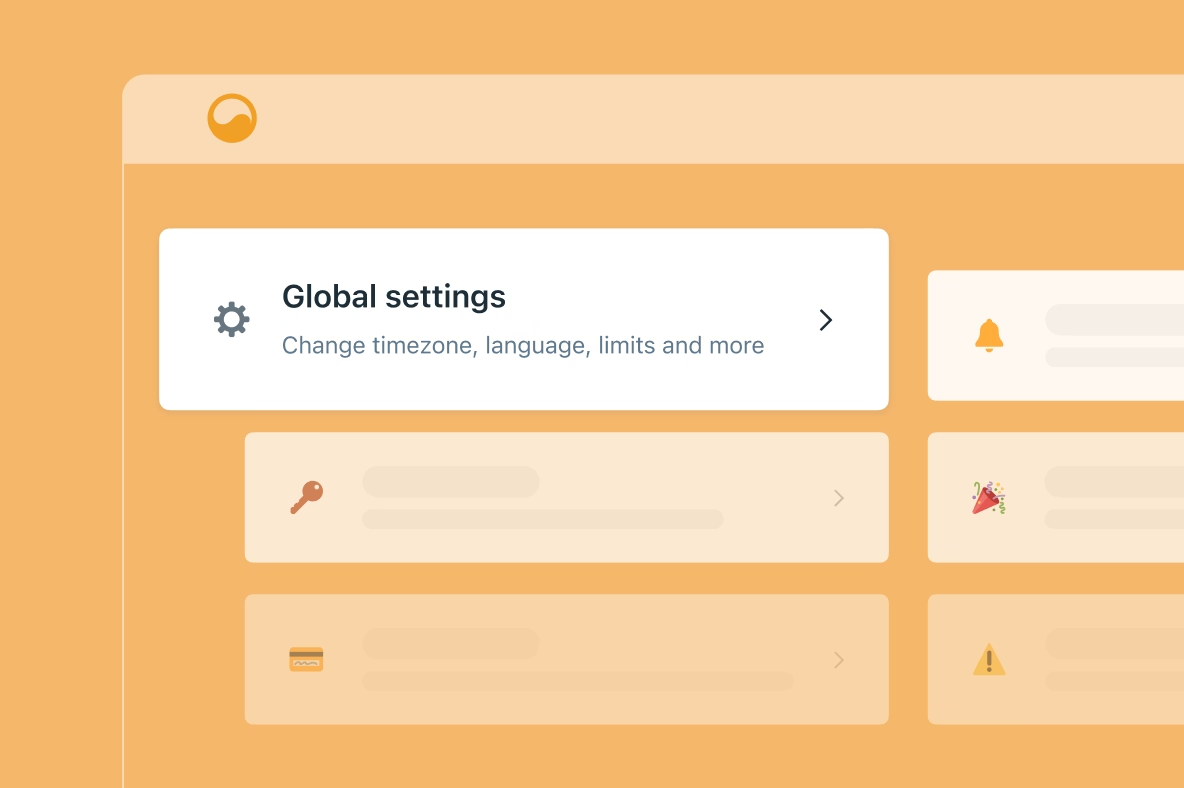
Not every team wants the same perks. Karma lets you create a fully custom reward catalog alongside the gift card options — team dinners, extra days off, learning budgets, branded swag, or anything else that fits how your team works and what they actually value. Your rewards, your culture.
- Create any custom reward — experiences, time off, learning budgets, team events, physical items
- Set your own point costs per reward — align the value of rewards with what matters most to your team
- Customise point names to match your brand — call them "stars", "coins", or anything that fits your culture
- Full branding control — your logo, your colours, your reward names across the entire Karma experience
Celebrate team wins together — not just individual achievements
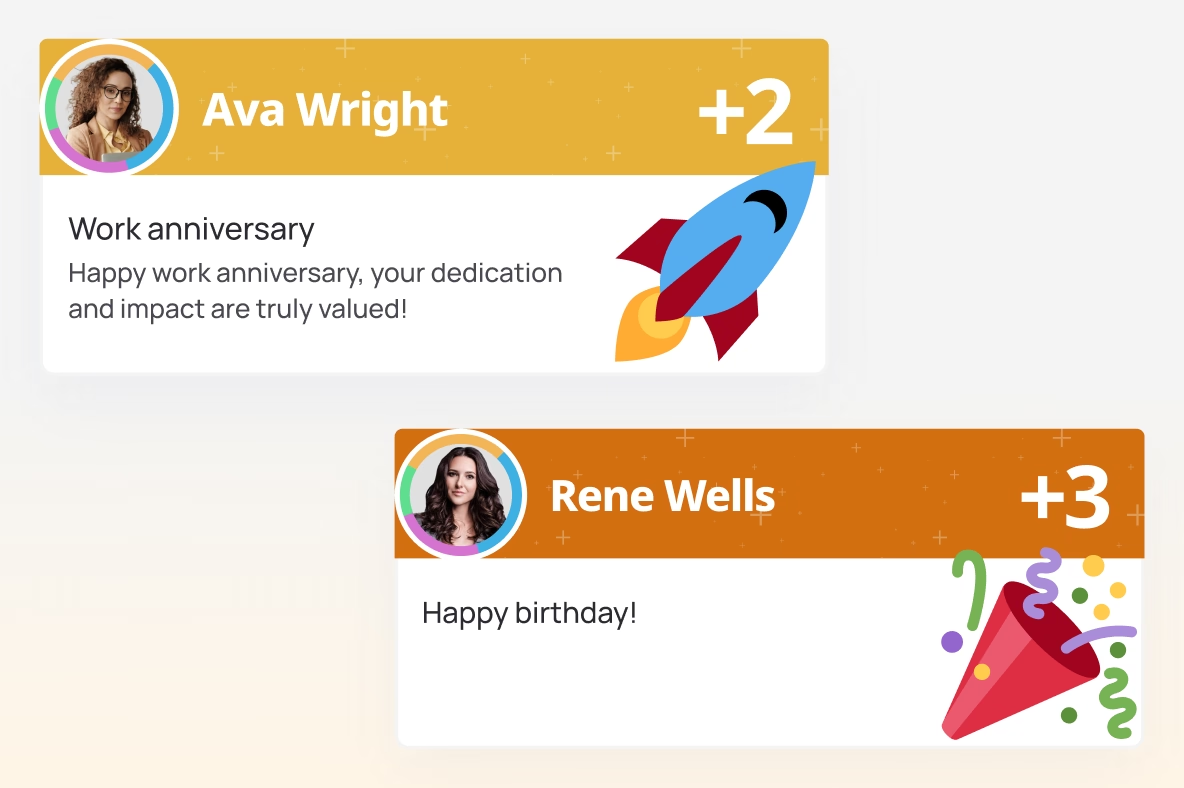
Some wins belong to the whole team. Group rewards let colleagues pool karma points toward a shared goal — a team dinner, an offsite, a group experience. When the target is reached, the reward is unlocked for everyone. It's the most effective way to boost morale after a big sprint, a product launch, or a tough quarter — because the celebration is collective, not top-down.
- Set a group reward goal — any reward, any point target, open to any subset of your team
- Teammates chip in karma points voluntarily — the progress bar in Slack keeps everyone motivated
- Reward unlocks automatically when the goal is reached — no manual tracking, no admin overhead
- Creates a shared moment of celebration that connects the team's daily recognition to a tangible outcome
Resources
View all- Recognition vs. Rewards: What Actually Motivates Employees?
For years, companies have tried to answer one deceptively simple question: What truly motivates employees? Is it money? Bonuses? Gift cards? Promotions? Or is it something deeper — like feeling seen, valued, and appreciated?
Jan 14, 2026 · 5 mins read
- Recognition on a Budget: High-Impact Ideas That Cost Nothing
Employee recognition doesn’t have to come with a hefty price tag.
Sep 11, 2025 · 6 mins read
- Beyond “Thank You”: 20 Creative Employee Recognition Ideas
A quick “thank you” is nice, but let’s be honest: it’s no longer enough to keep employees motivated or loyal. In today’s modern workplace, recognition has to go deeper, feel more genuine, and be woven into the everyday culture of an organization.
Jul 31, 2025 · 5 mins read
Frequently asked questions
What are employee perks and rewards?
Employee perks are benefits and rewards given to team members beyond their salary — things like gift cards, experiences, team celebrations, or custom incentives. Unlike fixed benefits (health insurance, pension), perks are typically earned through recognition or performance. Karma connects perks directly to peer recognition: when a colleague gives you karma points, those points accumulate and convert to real rewards you choose yourself — from popular gift card brands to custom rewards designed by your company.
What is an employee incentive program?
An employee incentive program is a structured system that rewards employees for specific behaviours, contributions, or achievements. The most effective programs are continuous (not just annual), peer-driven (not just manager-approved), and tied to real rewards employees actually want. Karma's incentive system runs automatically inside Slack and MS Teams — employees earn karma points for peer recognition, hit milestone bonuses, and redeem points for gift cards or custom rewards on their own schedule.
What are good employee appreciation gifts?
The most appreciated employee gifts are ones the recipient chose themselves. Generic company-branded merchandise or standard gift cards feel impersonal. Karma solves this by letting employees accumulate points and redeem them from a reward catalog your company configures — popular gift card brands, custom experiences, team dinners, or anything else that fits your culture. The gift feels personal because the employee picked it, and meaningful because it was earned through peer recognition.
How do group rewards work?
Group rewards in Karma let the whole team pool karma points together to celebrate a shared achievement — like shipping a product, hitting a sales target, or completing a tough quarter. Instead of a manager choosing a reward, teammates collectively chip in points toward a group goal. When the goal is reached, the reward is unlocked for everyone. It turns a top-down benefit into a peer-driven celebration that reinforces the team's contribution rather than just one person's.
How do you boost employee morale with rewards?
The most effective way to boost morale with rewards is to make them frequent, peer-driven, and meaningful. One-off annual bonuses have almost no lasting effect on day-to-day morale. Karma creates a continuous reward loop: recognition happens daily in Slack, points accumulate transparently, and employees redeem rewards when they choose. The combination of public peer praise and real redeemable value consistently produces higher morale scores than traditional reward programs.
Can employees donate karma points to charity?
Yes — Karma's rewards catalog includes charity donations as a redemption option alongside gift cards and custom perks. Employees who'd rather direct their recognition points to a cause they care about can do so directly from the catalog. It's one of the features that makes Karma work for teams where not everyone is motivated by personal monetary rewards — and it signals to the whole organisation that recognition has real-world value beyond individual gain.
Ready to get started?
If you're ready to get started with Karma, sign up now and explore the benefits of the recognition for your team. You can also reach out for a free demo.