


Year in Karma
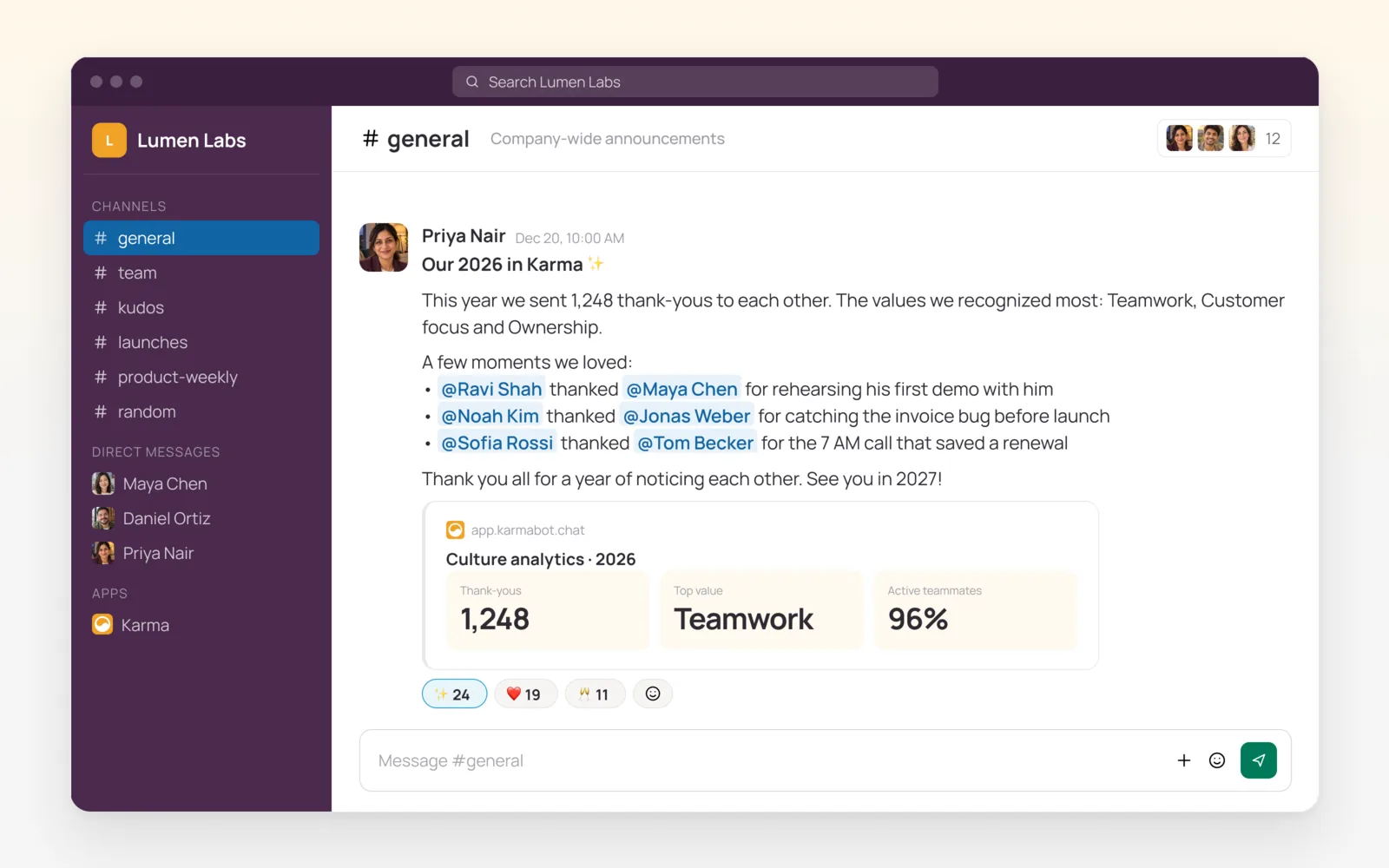
At the end of the year, look back at your team's recognition together: how much thanks was shared, which values stood out and which moments people remember.
Why it works
A year is long, and most of what happened in January is forgotten by December. Looking back at the year's thank-yous reminds the team how much they helped each other and how much they achieved together.
It also shows what your culture really looks like: not the values on the website, but the ones people recognized in each other day after day.
How to run it
- Pull the numbers. In Culture analytics, look at how many thank-yous your team sent and received this year, and which values were recognized most.
- Find the stories. Pick 5–7 thank-yous that stood out: warm, specific, from different people and teams.
- Notice the connections. Look for people from other teams who often helped yours.
- Share it. Run a 15–20 minute session at your last team meeting of the year, or post a summary in the team channel.
- Thank everyone personally. Add at least one line for each person on the team, not only those who received the most karma.
Agenda for a 20-minute session
- 5 min: the year in numbers
- 10 min: favorite thank-you stories, read out loud
- 5 min: each person thanks one colleague for something from this year
Message templates
Year in Karma post
Our [Year] in Karma

This year we sent [X] thank-yous to each other. The values we recognized most: [Value], [Value] and [Value].

A few moments we loved:
- [Name] thanked [Name] for [what they did]
- [Name] thanked [Name] for [what they did]
- [Name] thanked [Name] for [what they did]

Thank you all for a year of noticing each other. See you in [Next year]!
Personal note from the manager
[Name], this year you [specific contribution], and your teammates thanked you for [values or examples]. Thank you for [quality you value in them].
How Karma helps
Karma keeps a year of thank-yous in one place, tied to company values. With Culture analytics, managers can quickly find the numbers and stories for the team's year in review.
How to measure
Compare with the previous year:
- how many people sent and received karma;
- how many people received karma at least once during the year;
- which values grew and which faded.
Free FigJam template
Use our Newsletter Template to share your Year in Karma in an internal newsletter.
Common mistakes
- Only showing the top receivers. Celebrate the whole team, not a leaderboard.
- Too many numbers. Two or three stats are enough. Stories are what people remember.
- Leaving someone out. Make sure every team member is mentioned at least once.
Frequently asked questions
What if our team started using Karma mid-year?
That's fine. Look back at the months you have, and call it "our first months with Karma".
Can we do this for the whole company?
Yes. Start with a company-wide post, then let each team lead run a short session with their team.
 Karma for Web
 Karma for Slack
 Karma for MS Teams
 Karma for Telegram